
This PDF collection examines how mathematics permeates daily life, from natural patterns to technological innovations. It offers clear definitions and real‑world examples for educators and learners and students
It invites readers to link math with physics, biology, and art and engineering.
Purpose and Scope of the PDF Collection
The purpose of this curated PDF library is to provide a comprehensive, freely accessible resource that showcases the pervasive role of mathematics across natural sciences, engineering and everyday life. By compiling peer‑reviewed articles, case studies, and instructional materials, the collection aims to bridge the gap between abstract theory and real‑world application. The scope spans foundational concepts such as number theory, algebra, and calculus, while also highlighting advanced topics like fractal geometry, symmetry analysis, and predictive modeling. Each document is selected for its clarity, relevance, and potential to inspire both educators and learners. The collection encourages interdisciplinary exploration, encouraging readers to see how mathematical patterns manifest in biological structures, physical phenomena, and technological design. With downloadable PDFs, interactive tools, and suggested teaching strategies, the library supports curriculum development and promotes lifelong learning. By making these resources openly available, the project seeks to democratize mathematical knowledge and foster a deeper appreciation for the language that underlies our world. Readers will encounter illustrative examples that connect mathematical theory to tangible phenomena, such as the golden ratio in art, the Fibonacci sequence in plant growth, and the harmonic series in acoustics. The PDFs also feature contemporary research on algorithmic design, machine learning applications, and sustainability modeling, demonstrating how mathematics informs policy and innovation. By engaging with these resources, students gain confidence in applying mathematical concepts to analyze data, design experiments, and interpret complex systems, thereby cultivating a deeper appreciation for the discipline’s relevance across disciplines. These insights empower learners today
How to Access and Download Resources
The collection includes a discussion forum for users to ask questions and share insights and collaborate.
The Role of Mathematical Proof in Understanding Reality
Mathematical proof validates concepts that underpin natural laws, allowing scientists to predict phenomena with certainty. By establishing truth, proofs bridge theory and observation, ensuring models remain across disciplines. It aids.

Defining Mathematical Proof and Its Applications
In the PDF, proof is defined as a logical chain that transforms assumptions into undeniable conclusions, ensuring consistency across mathematical systems. It is the backbone of scientific reasoning, enabling engineers to design bridges that withstand earthquakes and biologists to model population dynamics with precision. Proofs are not merely formalities; they translate abstract axioms into tangible predictions. For instance, the Pythagorean theorem, proven once and for all, underpins GPS satellite alignment, while the proof of the prime number theorem informs cryptographic protocols that secure online transactions. The document emphasizes that proof techniques—direct, contradiction, induction, and construction—serve as tools for validating models in physics, chemistry, and economics. By mastering these methods, students learn to discern which assumptions hold in real‑world scenarios and which require refinement. The PDF also showcases historical milestones, such as Euclid’s Elements and Gödel’s incompleteness theorems, illustrating how proof has evolved to accommodate increasingly complex systems. Practical applications highlighted include algorithmic efficiency proofs in computer science, stability proofs in control theory, and convergence proofs in numerical analysis. Ultimately, the text argues that a robust understanding of proof equips researchers to push the boundaries of knowledge, ensuring that our interpretations of reality remain grounded in rigorous, verifiable logic. This synthesis underscores the indispensable role of proof in translating abstract theory into actionable insight.
Moreover, the PDF addresses the pedagogical importance of proof, recommending interactive proof‑building exercises that allow learners to experiment with hypotheses before formalizing them. It stresses the role of peer review in validating proofs, mirroring scientific publication standards. The resource also links proof concepts to emerging fields such as quantum computing, where proofs of entanglement and error correction are essential for fault‑tolerant architectures. By integrating these diverse examples, the PDF demonstrates that mathematical proof is a universal language bridging theory and practice, and that its mastery is indispensable for anyone seeking to harness mathematics in our increasingly data‑driven world.
Examples of Proofs in Natural Phenomena
In the PDF, several natural phenomena are examined through rigorous mathematical proofs that confirm their underlying principles. One highlighted case is the Fibonacci sequence’s appearance in phyllotaxis; a proof demonstrates that the optimal packing of leaves follows the golden ratio, minimizing overlap and maximizing light exposure. Another example involves the symmetry of crystalline structures; group‑theoretic proofs classify lattice arrangements, explaining why certain minerals exhibit identical diffraction patterns; The document also presents the proof of the conservation of energy in thermodynamic cycles, linking differential equations to measurable heat exchange in engines. In ecology, a proof of the logistic growth model shows how population limits arise from resource constraints, providing a quantitative basis for conservation strategies. The PDF further explores chaos theory, offering a proof that the Lorenz system’s sensitive dependence on initial conditions leads to unpredictable weather patterns, yet remains bounded within a strange attractor. Finally, fractal geometry is used to prove that coastlines possess non‑integer dimensions, a result that reconciles the apparent irregularity of shorelines with mathematical scaling laws. These proofs collectively illustrate how abstract reasoning validates empirical observations across biology, physics, geology, and environmental science. Such proofs show that math concepts are not abstract but observable!! so
Patterns and Symmetry in Nature
This PDF explores how natural forms—spirals, hexagons, and fractals—reflect mathematical symmetry. It details how the golden ratio governs shell growth, how honeycomb cells optimize space, and how fractal geometry explains coastlines and plant branching. Its study uncovers ecological patterns land !
Fractals and Self‑Similarity in Biological Structures
In the PDF, the discussion centers on how fractal geometry appears in living systems, revealing patterns that repeat at multiple scales. The document highlights the branching of trees, the venation of leaves, and the alveolar structure of lungs as classic examples of self‑similarity. It explains how these patterns optimize resource distribution, light capture, and gas exchange, and how mathematical models of fractals can predict growth rates and structural resilience. The text also explores the role of the golden ratio in the arrangement of seeds in a sunflower head and the spiral growth of shells, linking biological form to mathematical constants. By integrating equations, scaling laws, and empirical data, the PDF demonstrates that fractal analysis provides insights into developmental biology, evolutionary adaptation, and even medical imaging, where self‑similar patterns help identify pathological changes. The section encourages readers to use computational tools to visualize fractal dimensions and to apply these concepts in designing biomimetic materials and sustainable architecture. Researchers also employ box‑counting methods to estimate fractal dimensions, revealing how complexity scales with size. These quantitative insights guide conservationists in assessing habitat fragmentation and engineers in optimizing porous materials for filtration and thermal management. Such studies underscore universality across scales and disciplines.
Spirals, Hexagons, and Other Repeating Motifs
In the PDF, the section explores how natural and engineered systems employ spirals, hexagons, and other periodic patterns to achieve efficiency and aesthetic harmony. Spirals appear in nautilus shells, sunflower heads, and galaxy arms, and the document explains the logarithmic spiral’s constant angle property that allows growth without distortion. Hexagonal tiling is highlighted in honeycomb structures, basalt columns, and graphene lattices, illustrating how equal‑area cells minimize material while maximizing strength. The text also discusses other motifs such as the Fibonacci sequence in seed arrangements, the Penrose tiling in quasi‑crystalline materials, and the Möbius strip in polymer science. Each motif is linked to underlying mathematical principles—scaling laws, symmetry groups, and optimization algorithms—that explain why these patterns recur across scales. The PDF provides visual diagrams, equations, and case studies, encouraging readers to model these motifs using software tools and to apply them in architectural design, nanotechnology, and data visualization. By understanding the mathematics behind these repeating structures, students can appreciate the unity of form and function in both the natural world and human‑made systems. The PDF also examines how these motifs influence ecological networks, guiding pollinator movement and nutrient distribution. It further connects the mathematical symmetry of hexagons to the efficiency of heat transfer in solar panels, and shows how spiral geometries inspire aerodynamic designs in aircraft wings. Readers are invited to experiment with parametric modeling, adjusting curvature and tessellation parameters to observe changes in structural integrity and visual appeal. The section concludes with a reflection on how recognizing these patterns fosters interdisciplinary collaboration, bridging mathematics, biology, physics, and art.

Technology and the Practical Use of Mathematics
This PDF showcases how mathematics drives modern tech, from algorithmic trading to AI, to AI, to structural engineering. It details optimization, signal processing, and cryptographic protocols, illustrating real‑world impact.—boosting spee
Engineering Design and Optimization Techniques
In the “Mathematics in Our World” PDF, engineers are shown how mathematical models underpin design and optimization. The document highlights linear programming for material allocation, differential equations for stress analysis, and Fourier transforms for signal filtering. It explains how finite element analysis uses matrix algebra to predict structural behavior under load, and how calculus of variations identifies minimal energy configurations in aerodynamics. The PDF also covers stochastic optimization for supply chain resilience, illustrating Monte Carlo simulations that forecast risk. Practical case studies include bridge design, where optimization balances cost, safety, and environmental impact, and aerospace components, where shape optimization reduces drag while maintaining structural integrity. The text emphasizes iterative design loops, where simulation data informs successive refinements, and the role of constraint programming in meeting regulatory standards. By integrating these techniques, the PDF demonstrates that mathematics is not merely theoretical but a critical tool for efficient, innovative engineering solutions. Moreover, the PDF showcases how machine learning algorithms, are applied to design resilient infrastructure, and computational fluid and. This integration exemplifies how abstract mathematical theories such as differential equations and optimization algorithms are translated into tools enable engineers to predict structural responses under conditionsthereby ensuring safety and efficiency. and growth now

Data Analysis and Predictive Modeling in Modern Industries
In the “Mathematics in Our World” PDF, data analysis and predictive modeling are presented as essential tools for contemporary sectors such as finance, healthcare, manufacturing, and logistics. The text explains how statistical inference, regression techniques, and machine‑learning algorithms are used to extract patterns from large datasets. It describes the use of time‑series analysis for stock‑market forecasting, Bayesian networks for risk assessment in insurance, and clustering methods for customer segmentation in retail. In manufacturing, the PDF highlights predictive maintenance models that rely on linear algebra and signal‑processing to detect equipment wear before failure. The document also covers the application of deep‑learning neural networks to medical imaging, enabling early disease detection and personalized treatment plans. Furthermore, the PDF discusses optimization of supply‑chain networks through linear programming and stochastic simulation, illustrating how mathematical models reduce costs while maintaining service levels. The text emphasizes the importance of data quality, feature engineering, and model validation, and it showcases case studies where predictive analytics have led to measurable improvements in efficiency, safety, and profitability across industries. By integrating probability theory, statistical mechanics, and algorithmic design, the PDF demonstrates how mathematics transforms raw data into actionable insights that drive decision‑making in the modern economy. The PDF also explores the role of big‑data platforms, such as Hadoop and Spark, in scaling computational resources for real‑time analytics. It outlines how distributed computing frameworks enable parallel processing of terabyte‑scale datasets, thereby accelerating model training and inference. Additionally, the document addresses ethical considerations in predictive modeling, including bias mitigation, data privacy, and transparency of algorithmic decisions. By presenting a balanced view of technical capabilities and societal responsibilities, the PDF equips readers with a comprehensive understanding of how mathematical principles underpin the data‑driven transformation of modern industries.
Educational Resources and Teaching Strategies
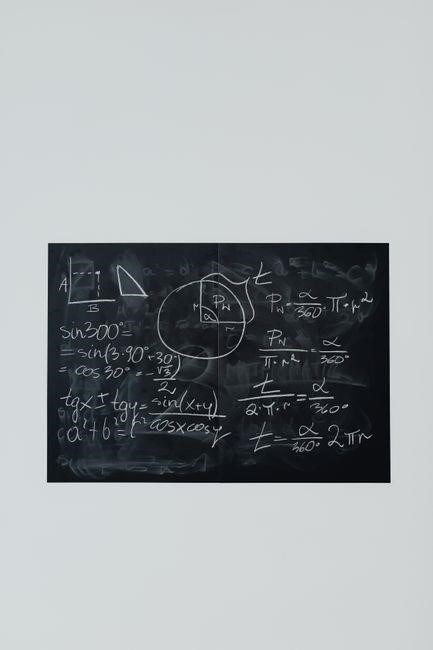
PDF guides integrate modules, case studies, and real‑world datasets. Teachers embed quizzes, simulations, and projects that align with standards. Online platforms host forums, video tutorials, and assessments to personalize learning and foster inquiry.

Guidelines for Incorporating PDFs into Curricula

Begin by mapping each PDF to learning objectives and standards. Align chapters with unit themes, ensuring that key concepts such as pattern recognition, proof structure, and data interpretation are highlighted. Use a modular approach: select concise sections, embed them in lesson plans, and provide guided questions that prompt critical thinking. Incorporate formative assessments by asking students to extract data, create visual representations, and write brief explanations of mathematical reasoning. Leverage technology by converting PDFs into interactive formats—embed hyperlinks, embed quizzes, or use annotation tools that allow students to annotate directly on the document. Encourage collaborative projects where students compare findings across PDFs, discuss real‑world applications, and present their conclusions. Finally, schedule periodic reviews to assess comprehension, adjust pacing, and integrate feedback from both students and peers. This systematic process ensures that PDFs become active learning tools rather than passive reading materials, fostering deeper engagement with mathematics in our world.
Teachers should consider accessibility by offering screen‑readable PDFs, captions, and adjustable fonts. Professional development trains educators to navigate PDFs, identify key sections, and link them to problem‑based learning. Embedding these resources into a coherent curriculum helps schools show measurable gains in confidence skills!.
Continuous evaluation keeps curriculum dynamic!
Interactive Tools and Online Platforms for Learning Mathematics
Modern learners thrive when static PDFs are transformed into dynamic experiences. Platforms such as GeoGebra and Desmos allow students to manipulate algebraic expressions, graph functions, and visualize geometric constructions directly within the PDF viewer or as embedded widgets. By linking the PDF’s mathematical proofs to live simulations, educators can demonstrate the step‑by‑step evolution of a theorem, making abstract logic tangible. Khan Academy and Coursera host video tutorials that align with the PDF chapters, offering quizzes that test comprehension and adaptive feedback that tracks progress. Notebooks on Jupyter or Google Colab let learners code real‑world data sets, then compare statistical outcomes with the patterns described in the PDF. Social learning is amplified through discussion boards on Edmodo or Canvas, where students post annotated screenshots, ask questions, and peer‑review each other’s solutions. Mobile apps like Photomath and Microsoft Math Solver provide instant solutions to problems copied from the PDF, reinforcing self‑paced study. Finally, cloud‑based document editors (Google Docs, Microsoft OneDrive) support collaborative annotation, enabling teachers to highlight key passages, embed hyperlinks to external datasets, and track student engagement in real time. By weaving these tools into the curriculum, educators turn static PDFs into interactive learning ecosystems that reflect the evolving nature of mathematics in our world.